
Golf Mats vs Grass: What Changes in Practice?
A mat makes it possible to practise when a grass tee is unavailable, recovering, or impractical at home. Grass remains the best place to check how a shot behaves from the lies a golfer will actually face. For a retailer or training facility choosing mats, the useful question is therefore not whether a mat “replaces” grass. It is which practice tasks need a consistent hitting station, and where a change in ball lie or strike could affect the lesson drawn from a shot.

A mat provides access when a grass tee needs time
Grass practice tees have a finite area and need recovery after divots. In its 2025 guidance on grass practice tees, the USGA describes artificial mats as one way to keep a facility open for practice while the grass area rests. Its example is concrete: if a grass tee is available for seven months and closes for one additional day each week, that preserves 28 days of usable grass-tee space over the season. The figure describes that seven-month scheduling example.
That access matters to a golfer. A repeatable station can support a warm-up, swing drill, or session into a practice net. A facility may rotate between mats and grass according to season and tee condition, while a home golfer may lack a suitable grass hitting area. A mat's value here is regular practice access; its setup still matters.
The same USGA article cautions that a grass practice tee may itself be thin, uneven, or made up of mixed grasses. “Grass” is not a single controlled reference surface. A golfer comparing practice results should note the actual lie and turf condition, rather than assuming every grass session duplicates a fairway shot.
The ball's lie can change the strike
A useful example comes from PGA professional Joe Ferguson. In a February 2026 Golf Monthly report, he described higher iron strikes on some fluffy mats. His 8-iron produced about 6,500 rpm of spin, against the roughly 7,800 rpm he was accustomed to from grass. These were his own observations on particular surfaces. For a golfer checking iron distances, the useful response is to examine the ball's lie and strike location alongside the carry number, then compare with a representative grass session.
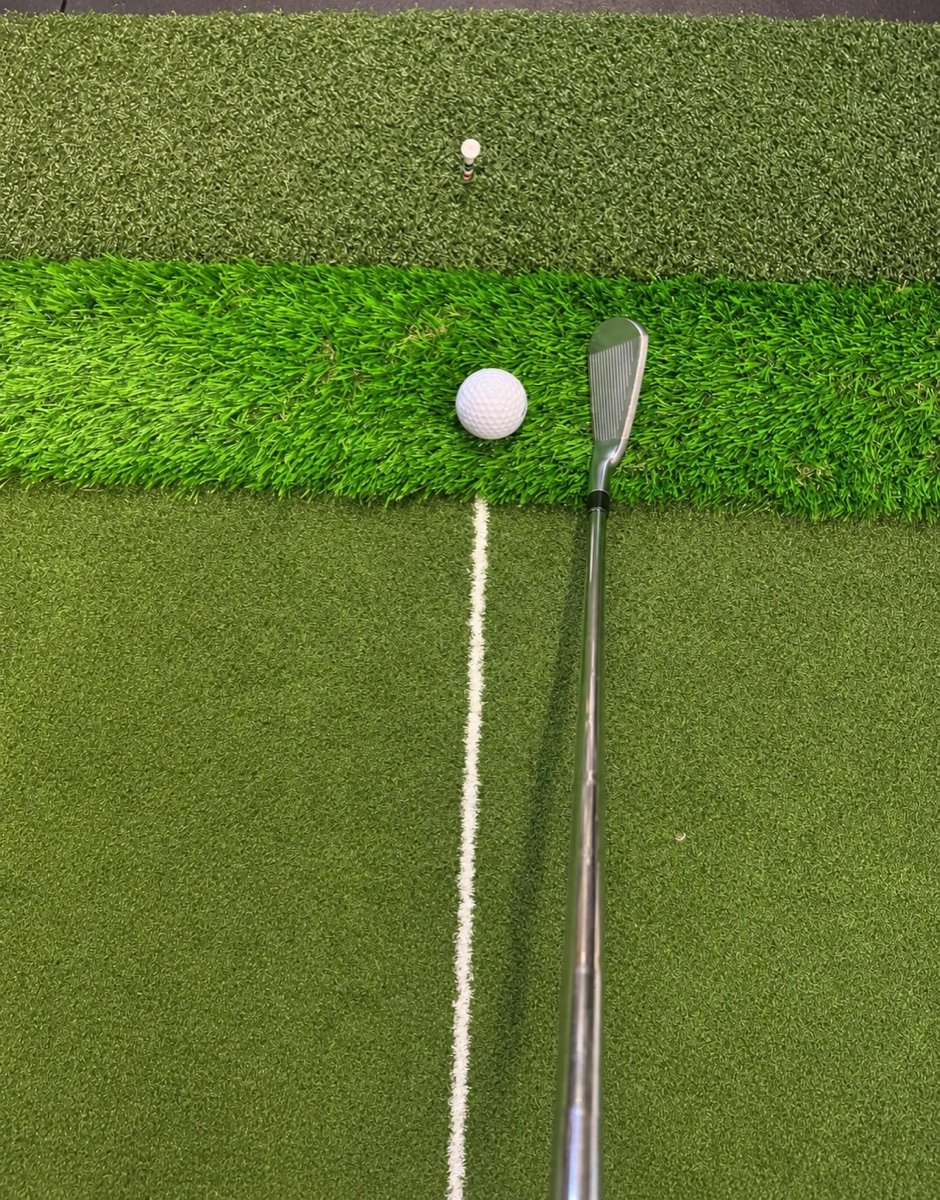
Keep the comparison fair before reading launch data
Surface is only one variable. Foresight Sports' September 2025 indoor-versus-outdoor guidance identifies ball model and condition, wind, range slope, setup, and changes in the golfer's swing as reasons numbers can differ. It advises using the same ball model and a consistent device and target setup when comparing sessions. It also notes that a light, unsecured mat can shift the ball out of a monitor's capture zone.
A simple comparison is more useful than a one-shot verdict. Hit a short series with the same club and ball, record the surface and lie, and check strike location alongside launch, spin, and carry. Repeat from a representative grass lie when available. Keep the mat or grass session's purpose in view: a repeatable swing drill, a tee-shot warm-up, and a decision about iron yardages call for different levels of transfer to the course. If the readings disagree, first look for changed ball position, strike or setup before assigning the whole difference to the surface.
For each comparison, record:
- The club and ball model used in both sessions.
- The surface condition and how high the ball rests.
- Strike location, alongside any available launch readings.
- Whether the mat, ball position or device moved during the session.
What this means for a mat range
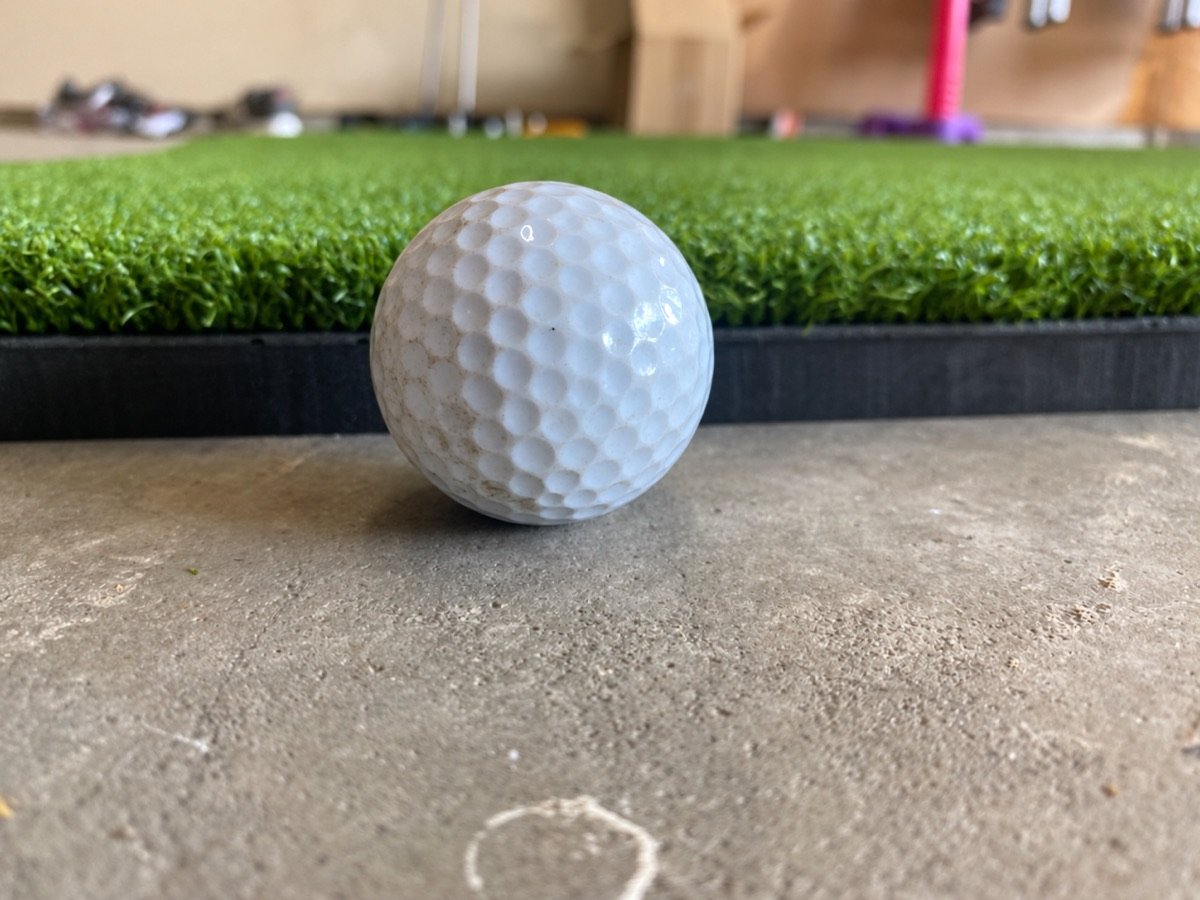
For a buyer, present a mat as a way to offer a defined practice surface and more opportunities to hit, with honest guidance about the lie it creates. Ask for the intended use, available space, turf layout, and desired dimensions. Then check a sample with the clubs and ball positions the end user will actually use. Photograph how the ball sits in each hitting area and compare strike patterns with a suitable grass reference. Record the sample configuration so the eventual order can be checked against it.
KAYRIDA's KS-GM-1 single-turf mat and KS-GM-2 tri-turf mat are complete-mat formats with configurable dimensions, turf thickness, and materials. The number of turf areas describes the layout; it does not by itself prove how shots transfer to grass. If you are sourcing for a retail line or practice facility, send the preferred model, intended use, and approximate quantity to our team in Huizhou, Guangdong, China so the proposed configuration can be discussed.