
Golf Mats That Take Real Tees: What Should Wholesale Buyers Check?
When sourcing a golf hitting mat for customers who want to use wooden tees, specify how the tee is supported, not just whether the mat “takes real tees.” A wooden tee may go directly into a purpose-built turf section, or it may fit into a holder installed through the mat. Both allow a wooden tee, but they create different products to assemble, photograph and sell.
For a wholesale order, the useful specification is a complete mat with a defined tee method, usable tee-height range and confirmed included parts. Approve that combination on a sample before putting a compatibility claim on the retail listing.
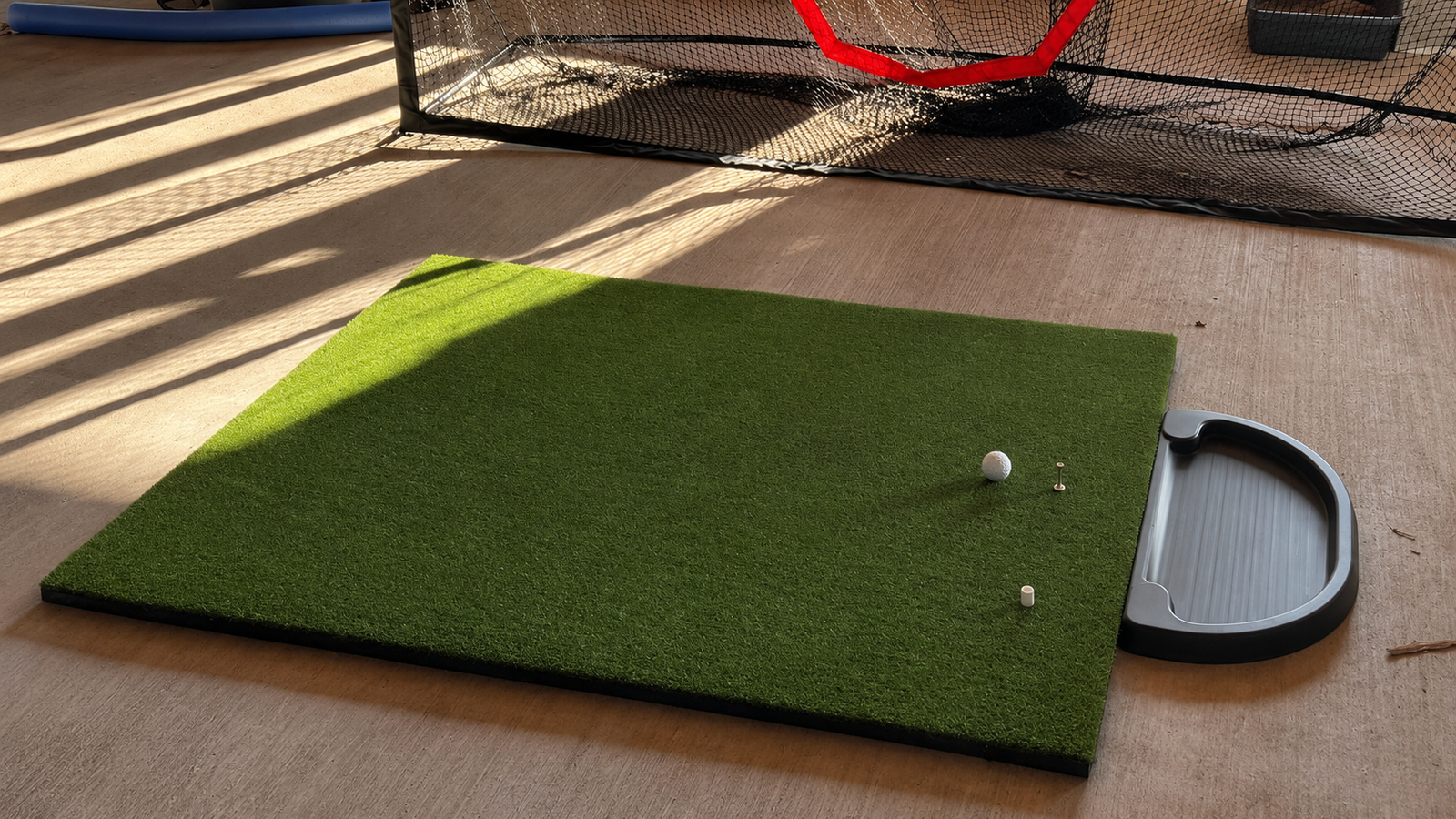
Three ways to support a teed ball
Direct insertion into tee turf. The golfer pushes a conventional tee into the designated turf section. This suits a brief in which customers specifically want to position their own tees without installing a holder. Confirm which part of the mat accepts the tee and whether the proposed tee length works at the desired exposed height. A thick-looking mat or a long-pile patch is not enough information to approve the feature.
All Turf Mats' June 2026 buying guide distinguishes its Super Tee line, with a stated 1-inch pile designed to hold wooden tees, from its Fairway line, with 3/8-inch pile and rubber-tee compatibility on specified models with holes. Those are specifications for that manufacturer's lines, rather than a minimum pile-height rule for all golf mats. For buyers, the practical lesson is to ask for the named construction and supported tee method together.
A holder for a conventional tee. Here the wooden tee is held by a separate component, rather than by the turf fibers. In its current product specification, checked in November 2026, GoSports lists a 1.5-inch rubber holder that accepts a wooden tee, alongside 2.25-inch and 3.5-inch rubber tees. This illustrates why “wooden tee compatible” needs an installation explanation. Ask whether the quoted mat includes the holder, where it fits and whether conventional tees are supplied separately.
A reusable tee supporting the ball directly. A rubber or adjustable tee can provide a defined tee position without a wooden tee. Fixed-height versions require a suitable size; adjustable versions require a compatible mounting arrangement. Fiberbuilt's Flight Deck specification, checked in November 2026, includes an adjustable-height tee as part of that particular practice mat. Adjustable height therefore does not necessarily mean direct insertion of a wooden tee.
None of these arrangements is automatically the right choice for every retail range. Direct insertion fits a specific customer preference; a holder can retain conventional-tee use with a different mat construction; a reusable tee may suit a ready-to-use practice package. Compare the complete configurations before comparing prices.
Measure the height above the playing surface
A tee's advertised length and the height at which it supports the ball are different measurements. Part of a through-mat component sits below the surface. A tee inserted into turf also has a portion below the top of the pile.
Ask for the ball-support height above the local turf surface, with the mat and any base assembled as sold. For a through-mat tee, measure the height of its ball-support point and the local turf surface from the same reference plane; subtract the latter from the former. For an adjustable arrangement, record the usable low and high settings on the actual sample. Do not subtract a catalogue mat thickness from a catalogue tee length unless their measurement origins are confirmed to match.

If a mat has multiple turf zones, take the surface measurement at the intended tee location. Keep this separate from the question of how an iron behaves when struck directly from the turf, which we cover in our mats versus grass guide.
Make the sample answer a specific buying question
Send the supplier the type and length of tee your customer expects to use, the intended clubs, and whether the mat will sit directly on the floor or in a supplied base. Request a photograph showing the full assembly, a close-up of the tee connection and a side view with a ruler at the tee position.
During sample review, insert and remove the intended tee using the supplied instructions. Check that it supports a ball at the requested settings, that a holder seats properly and that the mat lies flat around it. If the configuration has to be lifted to fit the tee, include that step in the instructions and evaluate whether it is practical for the intended customer. Agree any repeated-use assessment separately and retain its method and results; a photograph of a standing ball cannot establish service life.
Carry the approved arrangement into the order specification: mat model, relevant turf section, mounting position, tee or holder type, included quantity and measured usable height range. If the factory proposes a different backing or tee component, review the combination again before retaining the original compatibility wording.
Brief KAYRIDA on the complete mat
Our KS-GM-1 single-turf mat and KS-GM-2 tri-turf mat provide starting points for discussing complete hitting-mat configurations. We can discuss dimensions, turf material and pile height around your requirements. Include the tee method in that brief so it can be checked against the proposed construction and sample.
To discuss a wholesale order with KAYRIDA in Huizhou, Guangdong, China, send us the mat model, approximate quantity and target market, together with the tee arrangement you need. Specify whether you require direct wooden-tee insertion or would accept a holder. That detail makes the quotation and eventual product description much more precise.