
Choosing a Backyard Soccer Goal for Kids: 4 × 3 ft or 6 × 4 ft?
For children's backyard practice, a 4 × 3 ft goal offers a smaller target where usable width is limited, while a 6 × 4 ft goal provides a wider and taller target if the practice area can accommodate it. Both KS-SG-6 sizes are intended primarily for children's practice. Choose between them by the child's activity and the available space—not as a progression from a children's goal to an adult goal.
These dimensions are nominal width × height. Measure the complete setup and the space around it before choosing a size.
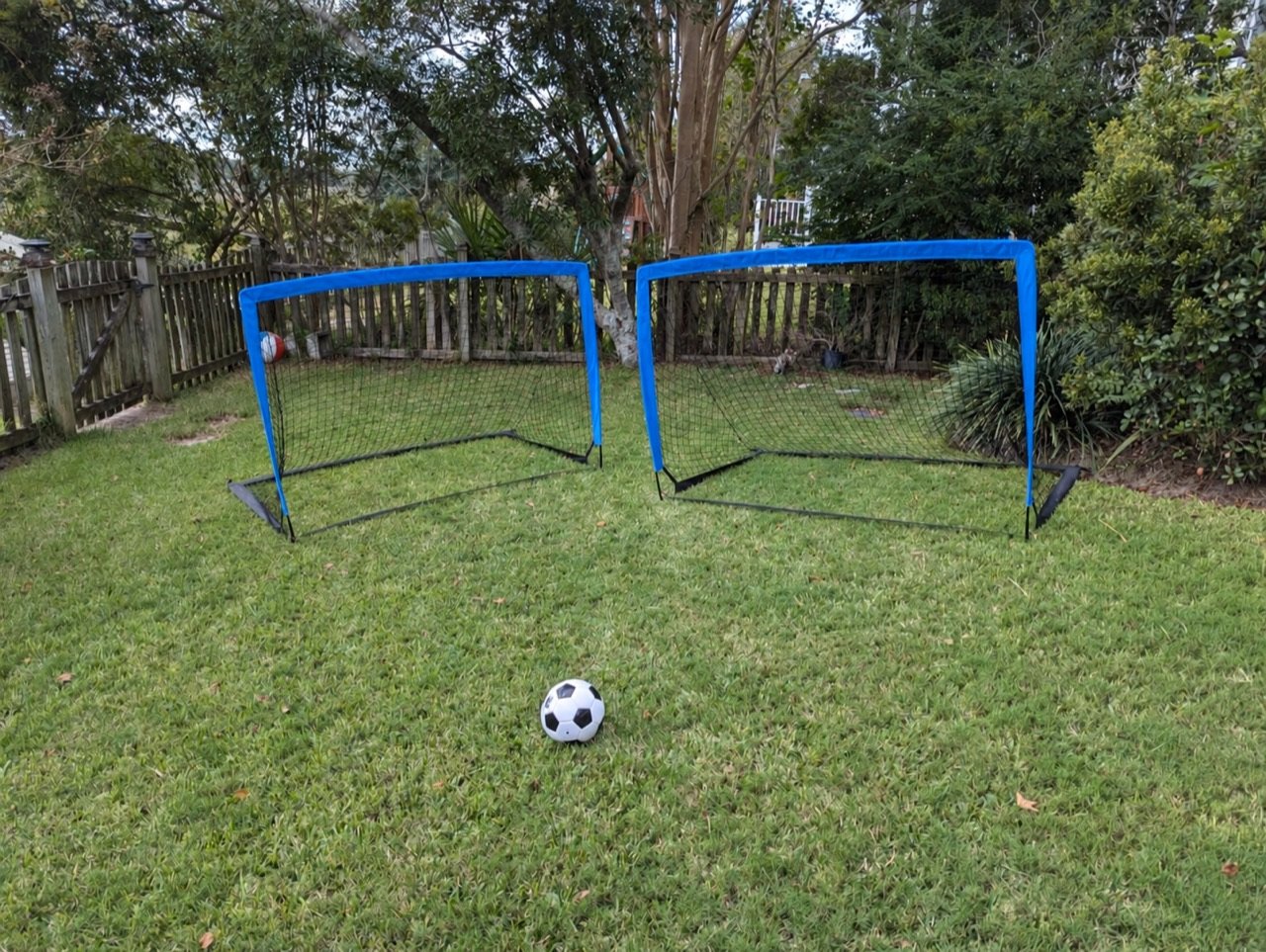
KAYRIDA offers its KS-SG-6 portable soccer goal training set in both sizes. The nominal 6 × 4 ft front rectangle is twice the area of the 4 × 3 ft rectangle. The calculation is width × height: 4 × 3 = 12 sq ft and 6 × 4 = 24 sq ft. Use the assembled-product dimensions, including depth, to plan the space on the ground.
| Offered size (width × height) | Approximate metric size | Nominal front rectangle |
|---|---|---|
| 4 × 3 ft | 1.22 × 0.91 m | 12 sq ft |
| 6 × 4 ft | 1.83 × 1.22 m | 24 sq ft |
Measure the usable space around the goal
Start where the goal will stand. Check the width available at that spot, then look behind it: a net and its support structure need space beyond the front opening. The actual assembled depth of the 6 × 4 ft version should be confirmed for the configuration you buy. Leave room for safe retrieval rather than placing a goal against a fragile fence, window, parked car, or busy path.
Next, identify where the child will practise from. Is there enough room for the planned activity and adult supervision? Can the child approach the ball without stepping into a planting bed or driveway? Walk the likely path of a missed ball as well as a scored one. A generous lawn can still have a narrow usable lane if people regularly cross it or if a wall sits close to one side.
If the choice is close, mark each proposed width on the ground with tape or cones and check the height separately with a tape measure. Then check the planned practice positions with the child and supervising adult. A 6 ft width may fit between two obstacles while leaving too little room around the goal to use the space comfortably. Conversely, a 4 ft opening may fit easily but give the child a smaller target than the intended activity calls for. The best size is the one that works in the whole practice area, not merely between two points on a tape measure.
Match the size to the child's activity
For a child practising short passes or controlled shots toward a compact target, the 4 × 3 ft option may suit the activity. The 6 × 4 ft option gives a wider and taller target for children's shooting games where there is enough usable space. It is still a small practice goal; the extra size does not turn it into an adult match or goalkeeper-training goal.
Avoid assigning a rigid age range to each size without a verified recommendation for the product. The child's ability, the planned activity, shooting distance and supervision help define the use. A coach or parent can describe those conditions when asking about a configuration. For retailers, describe both options as children's practice goals and make the dimensions visible, so customers understand what they are selecting.
If you are preparing for an organised league or school competition, verify its current equipment rules separately. For example, England Football introduced 3v3 as its U7 entry format for the 2026/27 season; its 3v3 guidance recommends a 120 × 75 cm goal (about 4 × 2.5 ft) and no goalkeeper. A 4 × 3 ft goal is close in width but taller. Specify the competition and its current requirements when you need a match goal.
Confirm the complete setup before you buy
Ask for the assembled depth, the components included, and the proposed anchoring method for your surface. Grass, artificial turf, and hard paving may call for different ways to secure a portable goal. Follow the product instructions and check the site before play; opening size alone says nothing about anchoring. If you need to move the goal often, also ask for the packed dimensions and carrying arrangement of the exact configuration.

For children’s organised sessions beyond home practice, our guide to portable goals for small-sided training covers the training brief and playing surface.
Brands and importers building a children’s soccer practice range can use the same checklist to compare sizes and avoid ambiguous listings. KAYRIDA, based in Huizhou, Guangdong, China, can discuss KS-SG-6 size, color, logo, accessories, and optional target cloth by configuration. View the soccer range or contact KAYRIDA with the product and approximate quantity you have in mind; the children’s practice activity and available space will help settle the size.