
Foam, Limited-Flight or Real Golf Balls: What Works with a Home Practice Net?
Choose the ball for the practice you want to do, then check that your hitting area and complete net setup can contain the shots you intend to hit. Foam balls can suit basic contact and movement drills. Limited-flight balls make sense when you want to watch some ball flight outdoors. Real golf balls give the closest practice to the ball you play on the course, but they demand the most care with the net, surroundings and missed shots. A ball advertised to fly less far is not a substitute for containment.
The labels can overlap: foam describes a material, while limited-flight describes intended flight behavior. Here, foam means soft practice balls; the limited-flight section considers named designs with specific distance claims.
Foam balls: useful for contact, limited for flight feedback
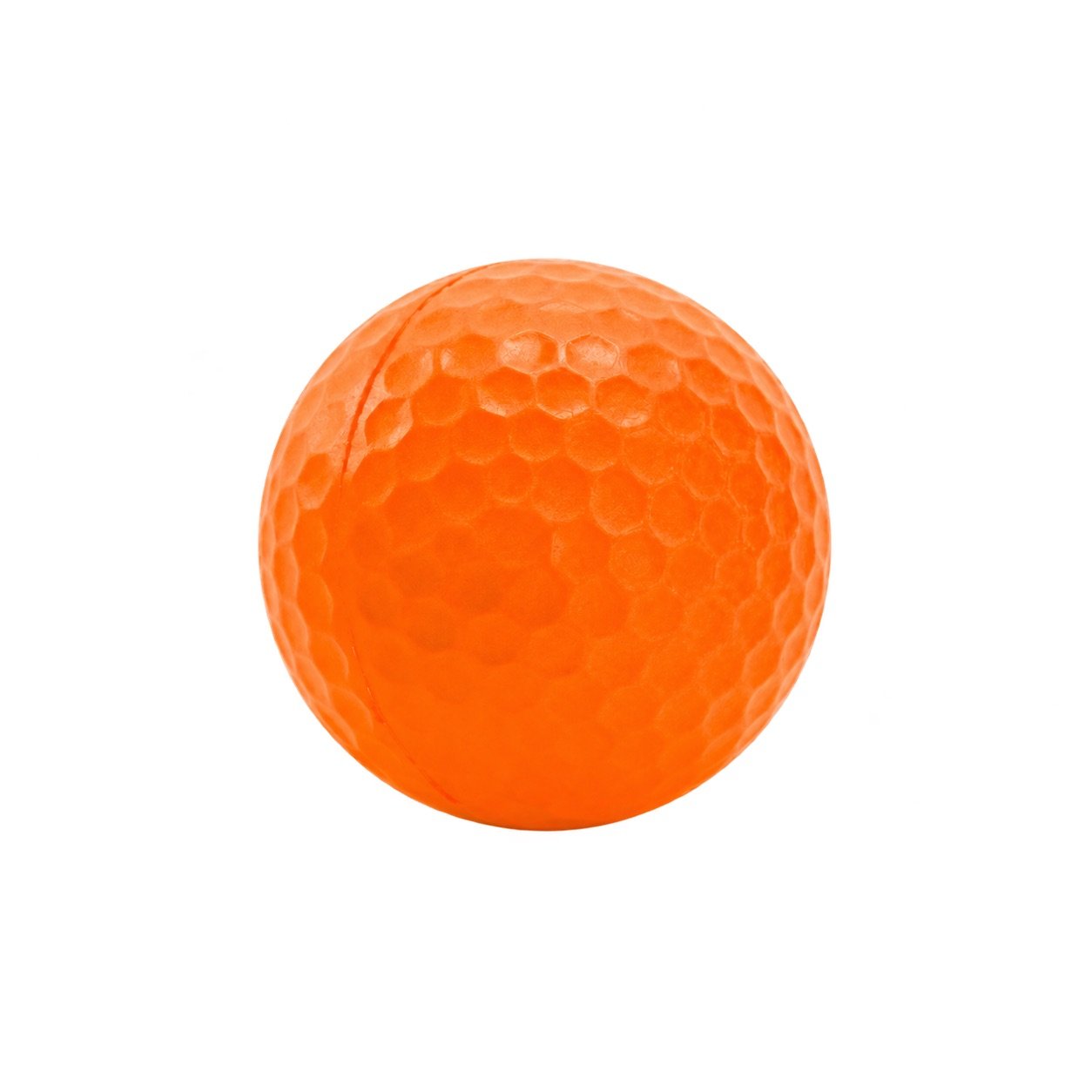
Foam balls let you rehearse setup, alignment, tempo and where the club meets the ball without committing to a full-distance shot. They are a reasonable first step when you are learning a swing or working in a small practice area. They can still miss a net, bounce, strike a person or damage a fragile object, so clear the area and control the direction of every shot.
“Foam” is a broad category, not a single flight specification. For example, Callaway describes its HX Soft Flight balls as soft foam that simulates flight at reduced distances, but its product page gives no fixed carry distance or percentage. Do not transfer a distance claim from one foam product to another. The lighter feel and altered flight also make foam a poor choice if the goal is to calibrate real-ball carry or judge a full shot’s final shape.
Into a net, focus on what you can actually observe: start direction over the first few feet, quality of contact and whether you hit the intended part of the net. If you cannot see enough initial flight to distinguish a good strike from a poor one, add a simple contact check such as impact tape on the clubface rather than guessing the full result.
Limited-flight balls: choose them for a visible outdoor arc
Limited-flight designs differ considerably. BirdieBall says its namesake ball flies about 40 yards with a full swing. almostGOLF says its ball travels approximately one-third as far as a regulation ball. Each figure refers to that manufacturer’s own design, so check the specific model rather than treating all limited-flight balls alike.

Such balls are most useful where there is genuinely room to observe their shorter arc and collect them. If the net catches the ball before an arc develops, you lose much of that flight feedback. The ball’s stated outdoor distance does not tell you how much space to leave behind, above or beside the net. It also does not prove that an errant shot will stay on your property.
Check the particular ball’s instructions and the site before hitting. If the available space cannot contain a miss, do not rely on the “limited-flight” label to make the shot acceptable.
Real balls: best for real-ball strike, with a suitable setup
If your goal is to compare strike, launch or spin with on-course play, use the same type of real ball you normally play—provided the entire practice station is appropriate for full shots. Foresight Sports explains that ball speed, launch angle, direction and spin determine calculated flight results. Changing the ball changes the input to that comparison; a foam or limited-flight result should not be treated as a regulation-ball carry number.

Before a real-ball session, inspect the net, target and connections for wear; set the net up according to its instructions; clear the area behind and around it; and make sure the intended shot and plausible misses have a contained path. Start with controlled, shorter swings and stop if the net shifts, a ball rebounds unpredictably or a shot escapes. Full swings near windows, vehicles, people or neighboring property call for more protection than a net’s front opening alone. A net’s advertised width and height do not establish an impact-speed rating or a safe hitting distance.
Which ball should you put in the bucket?
| Practice aim | Ball choice to consider | What to check |
|---|---|---|
| Rehearse setup and contact | Soft foam practice ball | Contact feedback and a contained hitting direction |
| Observe a shorter outdoor arc | A named limited-flight design | That model’s flight behavior and available space |
| Compare with on-course ball behavior | The regulation ball normally used | Complete net setup and any monitor requirements |
For setup and contact drills, begin with foam. To see a reduced outdoor flight path, choose a named limited-flight model and plan around its stated behavior, with room for mishits. For meaningful real-ball practice into a net, use real balls only after the complete station is set up and checked for the shots you plan to hit. If you use a launch monitor, follow that device maker’s ball and space guidance rather than assuming it will read every practice ball accurately.
KAYRIDA’s KS-GN-2 golf hitting net with target is a complete 10 × 7 ft net option for this kind of practice station. Explore the golf practice net range to compare complete setups. For a wholesale or OEM inquiry, contact our team in Huizhou, Guangdong, China with the net model, intended practice activity, use location and approximate quantity so the team can discuss the appropriate configuration.