Soccer Goal vs Rebounder: Which Fits Kids’ Backyard Practice?
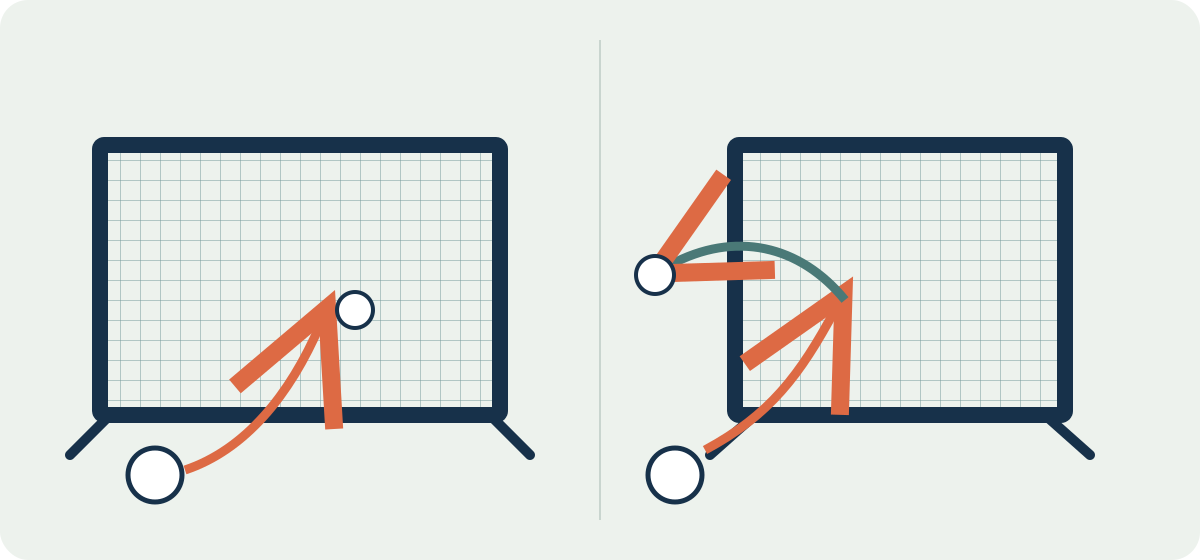
A soccer goal gives a child a place to aim, score, and play a small game. Its net catches shots that enter the opening. A rebounder sends a struck ball back toward the player, creating another touch without someone else passing it back. That difference—ball retention versus ball return—is the useful starting point for choosing backyard equipment. Neither function automatically replaces the other.
Swipe sideways to compare.
| Practice priority | Portable goal | Rebounder |
|---|---|---|
| Main job | Defines a scoring target and catches shots into its opening | Returns a ball for another touch |
| Natural activity | Shooting, finishing, goalkeeper play, or a small game | Solo passing, receiving, and first-touch practice |
| Ball behavior to expect | A shot that misses the opening still needs retrieving | Return direction and speed depend on the product and the strike |
| Key space question | Is there room for the goal and a safe shooting area? | Is there room for the unit and a safe return path? |
Choose the practice, then measure the yard
If the child wants to shoot at a recognizable target or play with a sibling or friend, a goal is the clearer choice. The frame makes success visible: the ball either goes through the opening or it does not. A goal can also support simple target games, especially when a target cloth is available for the specific kit. It should not be described as a ball-return trainer. Balls that miss the goal may travel beyond it, so the surrounding space matters as much as the opening size.
If practice usually happens alone and the priority is repeated passing and receiving, a rebounder may fit better. Its return gives the player a new ball to control after each strike. Rebounders vary, though, and their surfaces can serve different types of practice. For example, the current SKLZ Quickster Soccer Trainer has a 6 × 4 ft large side and a 6 ft × 20 in small side; SKLZ presents it for ground and air passing and receiving. Check both the return surface and the intended ball path when comparing models.
Families seeking both a scoring target and a return surface can consider a combination design, provided the yard can accommodate its full setup. The Open Goaaal Junior, for instance, lists an 8 × 4.5 ft goal, a 16 × 8 ft rebounder, and a total installation area of 21 ft 6 in × 6 ft 2 in on grass with soil. The example makes a practical point: the visible goal opening is not the installation footprint. The space for supports, play, and the ball’s path must be assessed from the model’s instructions.
Whatever the format, check the ground surface and follow the selected model’s setup and anchoring instructions. Leave adequate clearance from windows, roads, and other hazards, and plan for balls that travel outside the intended target.
What a retail buyer should promise
For a children’s portable goal, keep the product description tied to the goal’s actual function: a defined target for shooting and backyard games, with a net that catches balls entering the opening. State the assembled opening size clearly, and distinguish it from the space needed to use the goal. For a rebounder, describe the verified return surface and the kinds of ball contact the sample supports. Avoid promising a particular return speed, direction, or training outcome without product-specific evidence.
KAYRIDA’s SG6 complete portable goal options are 4 × 3 ft and 6 × 4 ft children’s practice goals. They should not be presented as adult full-size goals. Size, color, logo, and accessories can be discussed for a proposed order, and a target cloth is an optional addition. For choosing between the two goal openings, see our backyard portable goal size guide. These are goal-kit details; a rebounder should be sourced and evaluated on its own confirmed specification.
Before approving a listing or sample, a buyer can make a short check:
- Function: Does the assembled sample match the intended promise—catching shots through a goal opening, returning struck balls, or both?
- Dimensions: Are the opening, return surface, assembled footprint, and recommended play clearance identified separately where relevant?
- Contents: Do the packed parts, instructions, and any optional target cloth match the proposed listing and sample?
- Use conditions: Do the instructions state the suitable surface, setup and anchoring method, and relevant safety limits?
- Claims: Are age suitability, materials, durability, and performance claims supported by the actual model documentation and testing, rather than inferred from photos?

KAYRIDA is a sports equipment manufacturer based in Huizhou, Guangdong, China. Retailers planning a children’s shooting or small-game assortment can review our portable goals or ask about a goal kit with the product, approximate quantity, and any size or accessory requirements. You can also browse our soccer range.
Equipment specifications referenced above were checked against the manufacturers’ current US product pages on 31 October 2026.